Organ on a Chip Research Group
The OOC Research Group at Brunel is an interdisciplinary team of academics developing tools to get a better understanding of diseases and develop new treatments for common health conditions.
The group incorporates engineers, life scientists and toxicologists. We have expertise in microfluidics, biomaterials and computational fluid dynamics. Class 1000 cleanroom facility for fabricating fluidic devices. Rapid prototyping facilities for creation of devices and systems in house. The life scientists have expertise in cell and tissue culture, microbial ecology and cancer specialists. The group has a bioinformatician for in silico studies. The group has class II biological laboratories for undertaking microbial work, PCR and sequencing. The human toxicology team has been investigating the role of chemicals and endocrine disruptors on cancer progression for a number of years. Their work now looks at both single and mixtures of chemicals and how these effect cells.
Current Projects
OOC Scaffolds
In this project, we aim to optimise and standardise scaffolds for in-house OOC systems, through the creation and assessment of different materials and manufacturing techniques so that the OOC technology can be validated as an alternative pre-clinical model to animals within the research industry. Within this project electrospinning and 3D printing will be used to produce scaffolds of varying architecture with different hydrogels to optimise parameters for different cell types.
Breast on a Chip
A project funded by Breast Cancer UK investigating the ‘Multifactorial impacts on early breast carcinogenesis – assessing the combined effects of preventable factors on breast cancer using a novel Organ-On-a-Chip platform.’ The alarming incidence of breast cancer worldwide cannot be explained solely by hereditary factors. Evidence suggests that extrinsic factors, such lifestyle and environmental contaminants (e.g. endocrine disrupting chemicals, EDCs), play a role in breast cancer development, but research linking EDCs to cancer is currently inconclusive. This is mainly due to the fact that most EDCs are studied individually at concentrations that don’t reflect realistic exposures. However, we are exposed to a large cocktail of chemicals, some of which may have an effect when acting together. We use an innovative Organ-On-a-Chip tool that integrates a flow-through system and three-dimensional in vitro breast cell cultures. By using this model, which closely resembles the breast tissue in women, we study how mixtures of EDCs present in human tissues acts together with lifestyle factors to affect breast cancer risk.
Vagina on a Chip
The overarching objective of this project, is to develop the lower female reproductive tract within an organ-on-a-chip system. This will create an in-vitro micro vaginal tissue which can mimic the in-vivo organ. The tissue will incorporate structures seen in the vaginal wall, including a stratified squamous epithelium with microvilli, tight junctions, microfolds and mucus. BV is the most common vaginal infection in women of reproductive age. It has been shown to affect up to 50% of the female population in the developing world and up to 33% of women in the developed world.
Organ on a Chip Systems
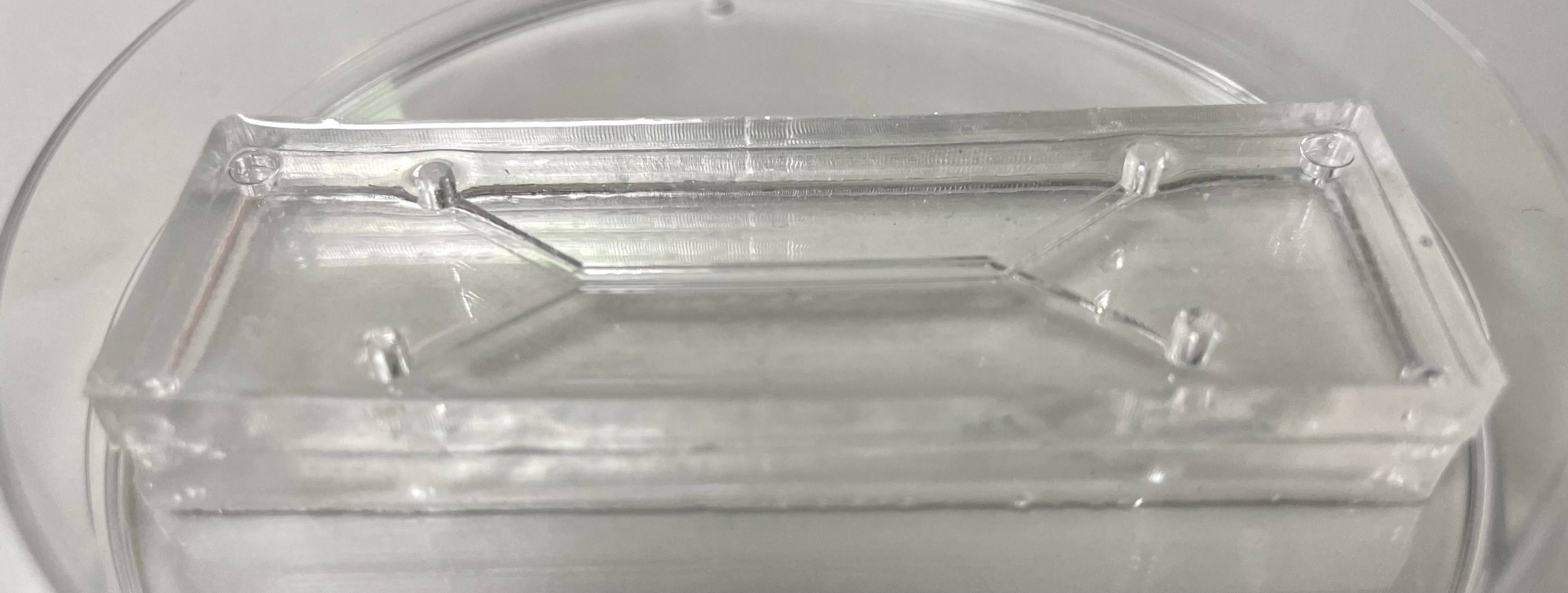
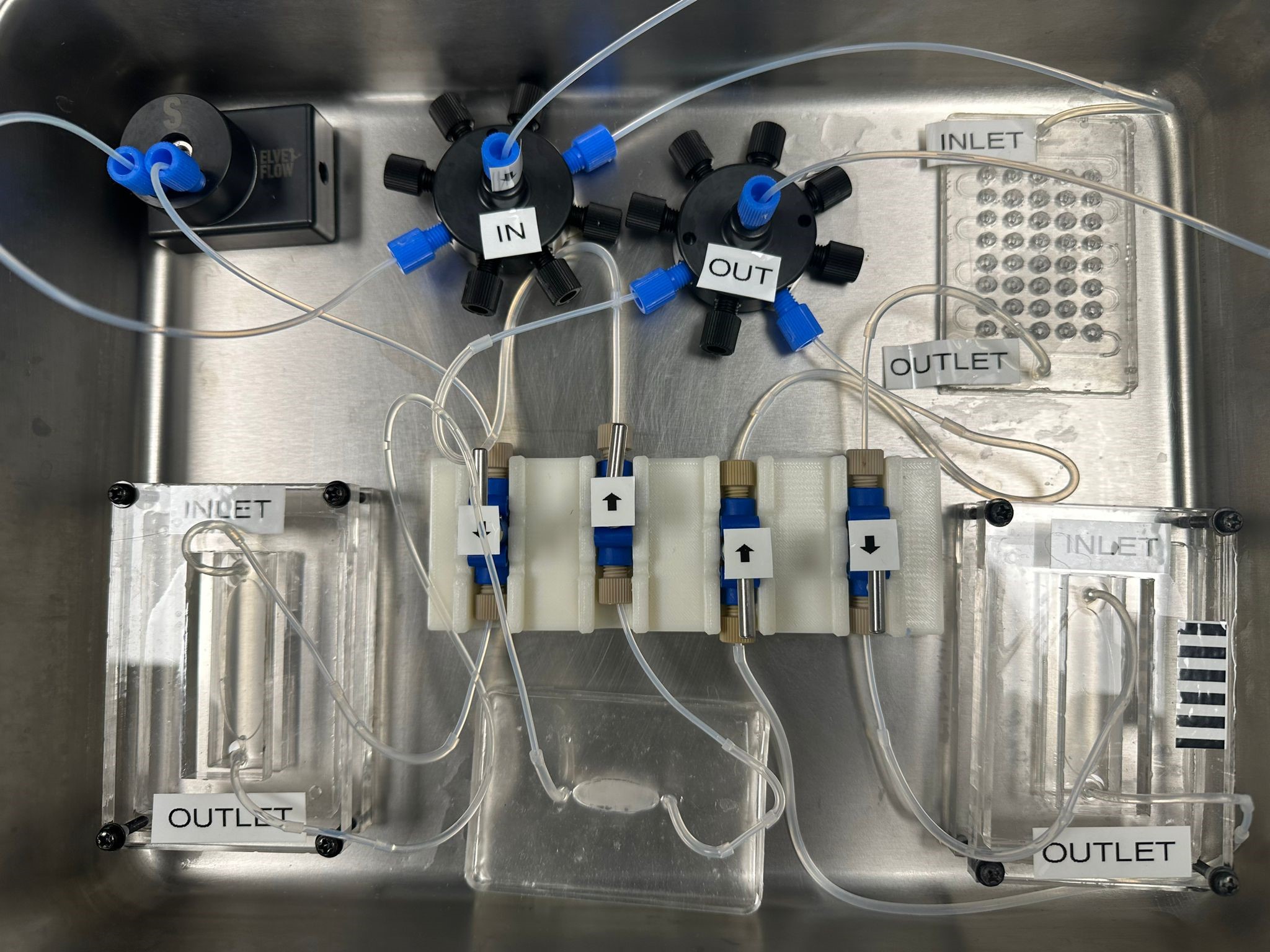
As a group we are interested in low cost manufacturing methods, microfluidics and sensors. If you are interested in developing low cost OOC systems for research use please get in touch.
Members of the OOC Research Group
Life Sciences: Dr Manos Karteris, Dr Ashley Houlden, Dr Sibylle Ermler, Dr Cristina Sisu, Prof. Amanda Harvery, Dr Gudrun Steinbeck, Dr Camilla Cerutti
Engineering: Dr Bin Zhang, Dr Carola Koenig, Dr Bin Wang and Prof. Wamadeva Balachandran.
Visiting Researcher: Dr Elisabete Silva (The Francis Crick Institute)
PhD Students and Alumni of the OOC Research Group
Current Students: Shuai Qiao, Gideon Enima (Dr Silva and Dr Karteris), Amal Tamayoi (Dr Harvey), Diyani Vispute (Dr Steinbeck)
Alumni: Dr Aya Aly, Dr Luana Osorio, Dr Sean Cullen, Dr Rachel Kerslake (Dr Karteris), Dr Sara Gomes (Dr Silva), Dr Angel Naveenathayalan
Latest News
Two Doctoral Researchers, Shuai Qiao and Dr Aya Aly will be presenting their results at EurOOCs 2024 in Milan, if you are there we hope you will have time to drop by and see their posters on Thursday 4th July in the main poster hall.
Dr Bin Zhang and Dr Ruth Mackay will be presenting at the (Inter)Disciplinary Bodies Conference at Brunel on 26th June
Dr Luana Osorio had her latest work published investigating the use of different scaffolds and looking at fibroblast response: Osório, L.A., Naveenathayalan, A., Silva, E. et al. Fibroblastic tissue growth on polymeric electrospun membranes: a feasibility study. Discov Appl Sci 6, 350 (2024). https://doi.org/10.1007/s42452-024-06038-2
Dr Bin Zhang has published a review paper on In Vitro cancer models. Bin Zhang, Meagan Morgan, Xin Yi Teoh, Ruth Mackay, Sibylle Ermler, Roger Narayan; Recent advances in 3D printing for in vitro cancer models. J. Appl. Phys. 14 April 2024; 135 (14): 140701. https://doi.org/10.1063/5.0200726
Older papers from the group can be found below:
Osório LA, Silva E, Mackay RE. A Review of Biomaterials and Scaffold Fabrication for Organ-on-a-Chip (OOAC) Systems. Bioengineering. 2021; 8(8):113. https://doi.org/10.3390/bioengineering8080113
Costa, J.; Mackay, R.; de Aguiar Greca, S.-C.; Corti, A.; Silva, E.; Karteris, E.; Ahluwalia, A. The Role of the 3Rs for Understanding and Modeling the Human Placenta. J. Clin. Med. 2021, 10, 3444. https://doi.org/10.3390/jcm10153444
Houlden A, Mackay R. Can microfluidics be used to create a more realistic in vitro model of the vaginal ectocervix to better understand bacterial vaginosis? Sexually Transmitted Infections 2022;98:74.
 Ruth Mackay @ Brunel University London